

Last updated: April 23, 2026
Table of Contents
- What Is Vulnerability Management?
- Understanding Vulnerability Management as a Service?
- The Business Value of Vulnerability Management Services
- The Lasting Value of Vulnerability Management as a Service
- Vulnerability Management as a Service FAQs
- Ready to stop reacting and start getting ahead of security risks?
Key Takeaways
- Vulnerabilities are weaknesses in your systems, software, or processes that attackers can exploit.
- Vulnerability management is the continuous process of finding and fixing these weaknesses before they can be exploited.
- A strong vulnerability management program is critical to passing audits and achieving compliance standards that win business.
- Managing vulnerabilities at scale without expanding internally requires careful planning and often outsourcing.
- Vulnerability management as a service (VMaaS) provides immediate access to expert-led security coverage with less overhead than building in-house.
Today’s cybersecurity threats don’t wait. Bad actors are faster, more sophisticated, and better funded than ever. It’s no longer enough to react to issues as they arise. Instead, companies must invest in more proactive approaches to keep pace with a fast-evolving threat landscape.
Whether you run a fast-growing SaaS startup or already operate at the mid-market level, vulnerabilities will hold you back unless monitored and addressed over time. The costs can include:
- Reputational damage from lost client data
- Fines and penalties from regulators
- Missed opportunities, since leads favor competitors with stronger security records
- Stalled product development as internal teams get pulled away from core tasks to put out security fires
A strong vulnerability management program helps your organization proactively find and fix its most significant security weaknesses before cybercriminals can exploit them. With vulnerability management as a service, you don’t have to build or run that program alone.
Keep reading to learn how to leverage this strategy to protect your brand.
What Is Vulnerability Management?
Vulnerability management is the ongoing process of finding and fixing security weaknesses in your systems, applications, and networks. It’s a continuous practice that’s often automated. This differs from vulnerability assessments, which provide a one-time snapshot of your risks instead of ongoing scanning for lasting protection.
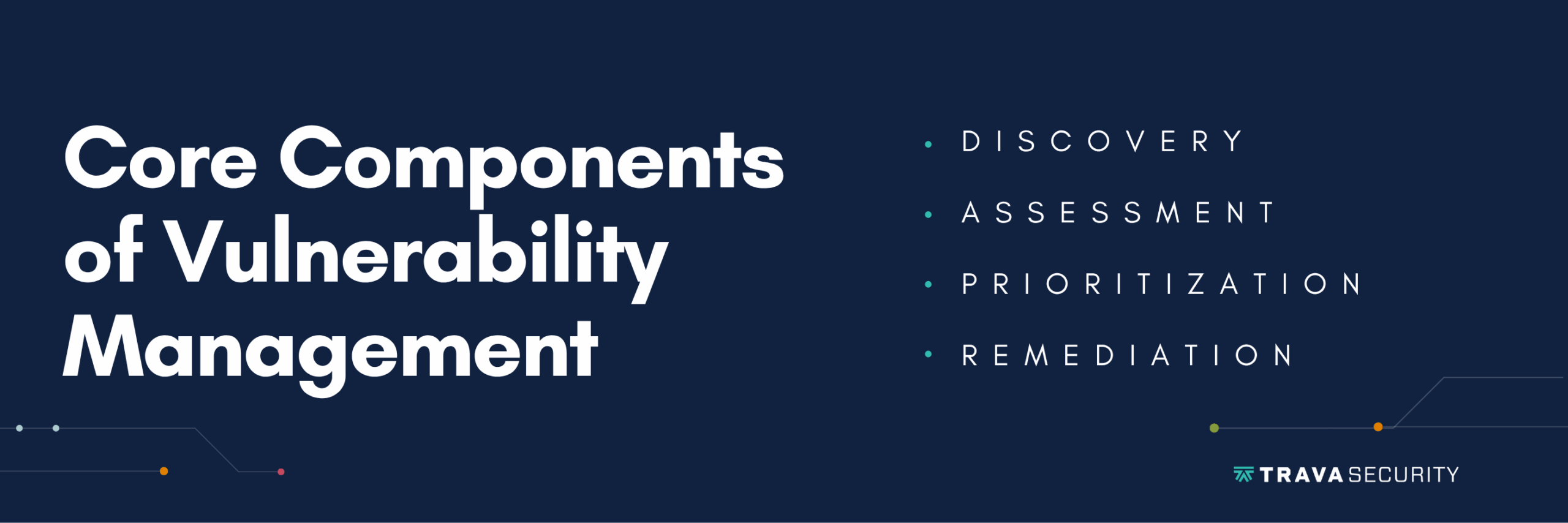
The core components of vulnerability management are:
- Discovery: Taking inventory of your digital assets and constantly scanning them for weaknesses
- Assessment: Evaluating the threat posed by vulnerabilities and summarizing the risk level to your business
- Prioritization: Helping your company understand which vulnerabilities present the most risk so you can address these first
- Remediation: Fixing vulnerabilities to protect your business and providing attack surface management services
What Are Vulnerabilities?
Vulnerabilities are weaknesses in systems, networks, and applications that can become entry points for unauthorized access. They’re like unlocked doors in your digital infrastructure that are just waiting for someone to test them.
A vulnerability management system works by continuously scanning for these weak spots so you can address them before bad actors find them first.
Some of the most common types of vulnerabilities for SaaS startups and mid-market companies include:
- Software bugs: Programming errors or flaws that can be leveraged by attackers
- Misconfigurations: Incorrect settings on systems or applications that create security gaps
- Weak passwords: Easily guessable or reused passwords that grant unauthorized access
- Unpatched systems: Outdated software with known vulnerabilities that haven’t been addressed through updates
Every organization has vulnerabilities, and the goal isn’t perfection. The important thing is finding and addressing these gaps in your coverage before someone else does. You’ll be more successful in doing so when you’re constantly scanning for them.
What Is Vulnerability Management?
Threat and vulnerability management is the systematic practice of searching out and closing the gaps in your cybersecurity perimeter. It helps to understand three terms that are often used interchangeably but mean very different things in practice:
- A vulnerability is a weakness in your systems, software, or processes.
- A threat is anything that could exploit that weakness.
- A risk is what happens when the two intersect.
Simply put: risk = threat + vulnerability.
That’s why a strong vulnerability management program won’t just react to known issues. It will also build a repeatable process for staying ahead of emerging vulnerabilities as your technology stack evolves over time.
What Are Vulnerability Assessments?
A vulnerability assessment is a point-in-time evaluation of your organization’s security posture. It uses scanning tools and expert analysis to identify weaknesses in your networks, applications, servers, and endpoints. Once completed, you get a prioritized report of what needs to be fixed first and why.
Vulnerability assessments typically include:
- Comprehensive scanning of your entire IT environment
- Expert analysis to prioritize findings by risk level
- Remediation guidance with clear, actionable next steps
- Recommendations for ongoing improvements
Note that vulnerability assessments and vulnerability management are two different things. An assessment gives you a snapshot, revealing what you need to fix. But vulnerability management is a continuous program, built to act on those snapshots. For most organizations, assessments are just one step in a broader vulnerability management lifecycle.
Want to go deeper? Listen to this podcast episode on why vulnerability management matters for cybersecurity compliance. Or explore vulnerability assessment tools to understand what’s available.
What Is the Vulnerability Management Lifecycle?
Continuous vulnerability management is a cycle, not a finish line. It’s the repeated process that your company follows to stay ahead of new security risks over time. This typically includes four stages:
- Identify: Scan your systems, applications, and infrastructure to surface known vulnerabilities across your networks, cloud environments, endpoints, and third-party software.
- Prioritize: Score and rank findings based on severity, exploitability, and potential business impact. This can be done with a risk-based vulnerability management approach, ensuring your team focuses on what matters most.
- Treat: Solve vulnerabilities through patches, configuration fixes, or compensating controls, depending on severity and business context.
- Monitor: Continuously track your environment for new vulnerabilities, verify that remediations were effective, and measure improvement in your security posture over time.
This cycle continues at regular intervals, but is often repeated outside of those intervals when a business changes its technology or deploys new features.
Understanding Vulnerability Management as a Service?
Companies with significant cybersecurity expertise may be able to manage vulnerabilities internally. But many growing SaaS companies and mid-market organizations can’t. That’s where vulnerability management as a service (VMaaS) comes in.
VMaaS is a subscription-based solution in which third-party experts are hired to handle the vulnerability management services your company needs.
Vulnerability management solutions delivered as a service typically include:
- Automated scanning
- Threat prioritization
- Human expertise to help you interpret findings
- Remediation guidance and assistance
- Reporting for compliance
But VMaaS is also highly flexible. You can choose to pay for whatever services you need and save by cutting those you don’t. Trava also makes it easy to scale services up and down over time as a company’s needs change. This ensures you’re only paying for the work you need at any given time.
Why Vulnerability Management Is Essential for Compliance
Having a vulnerability management process is often mandated by key regulations and industry standards. It’s not something most companies can opt out of. Here’s why:
- Compliance frameworks demand it. Prominent frameworks like SOC 2, HIPAA, PCI DSS, and GDPR mandate vulnerability management as a core security control. These frameworks outline specific guidelines for protecting sensitive data, and vulnerability management plays a key role.
- Proactive security is key. Compliance usually means proactively safeguarding your data. Vulnerability management software and ongoing scanning minimize the risk of data breaches and the regulatory fines that come with them.
- It demonstrates due diligence: Compliance audits often involve proving your organization’s commitment to cybersecurity. A robust vulnerability management program, with documented processes and procedures, serves as evidence of your due diligence in protecting sensitive data.
This is especially important for growing SaaS startups. Achieving certification for a key framework like SOC 2 or ISO 27001 is often the difference between winning a deal and losing a prospect to the competition. Clients naturally prefer to work with partners they know will safeguard their security.
But these programs are essential for mid-market companies, too. They help to keep the business compliant and protected as the technology stack grows more complex.
Building a Strong Vulnerability Management Program: A Practical Guide
To build a vulnerability management program that works, you’ll need to do more than run scans. Here’s a practical framework to get started:
- Establish a vulnerability management policy. Define clear guidelines outlining your commitment to vulnerability management. This policy should specify the types of systems and applications you’ll scan, the frequency of those scans, and your process for fixing vulnerabilities.
- Invest in the right vulnerability management tools. Use automated tools that help to identify weaknesses across your network infrastructure, applications, and operating systems. Some of the most useful include network scanners, web application scanners, and endpoint vulnerability scanners.
- Prioritize and remediate vulnerabilities. Not all vulnerabilities are equal. You’ll need a risk-based approach to prioritize them based on severity and exploitability. This will help you spend resources more intentionally, addressing the most critical vulnerabilities first.
- Commit to continuous improvement. The cybersecurity landscape is constantly evolving, with new vulnerabilities emerging every day. That’s why any vulnerability management program must be a continuous process. Conduct regular scans, update your tools and processes, and learn from past experiences to strengthen your overall security posture over time.
Beyond Compliance: The Additional Benefits of Vulnerability Management
While compliance is a major reason companies invest in vulnerability management solutions, there are other major benefits. A strong program can also provide:
- Improved security posture: You’ll significantly reduce your attack surface by proactively identifying and mitigating vulnerabilities. This minimizes your risk of data breaches and cyberattacks.
- Improved system performance: Addressing vulnerabilities often means patching software and updating configurations. This can lead to more uniform and efficient system performance.
- Reduced downtime: A proactive approach can also prevent security incidents that might otherwise cause system outages and operational disruption.
- Increased customer confidence: Customers are increasingly aware of cybersecurity threats. Developing a robust vulnerability management program is one of the most effective ways to demonstrate your commitment.
Is your organization proactively managing vulnerabilities or hoping nothing slips through?
Trava’s vulnerability assessment services can help you answer the question. We’ll also identify your critical security risks and chart a practical path to addressing them at a reasonable cost. Whether you’re a SaaS startup working toward your first compliance certification or a mid-market company looking to strengthen your security operations, we’re here to help. Learn more about our vulnerability assessment services today.
The Business Value of Vulnerability Management Services
Vulnerability management services can help your company avoid serious cybersecurity issues. They deliver continuous monitoring, threat prioritization, and remediation support, helping the company protect its stability in an ever-evolving cybersecurity landscape.
How Vulnerability Management Services Benefit Your Company
Vulnerability management as a managed service can help your company in several valuable ways. Here’s a closer look at what to expect when partnering with a trusted vulnerability management service provider.
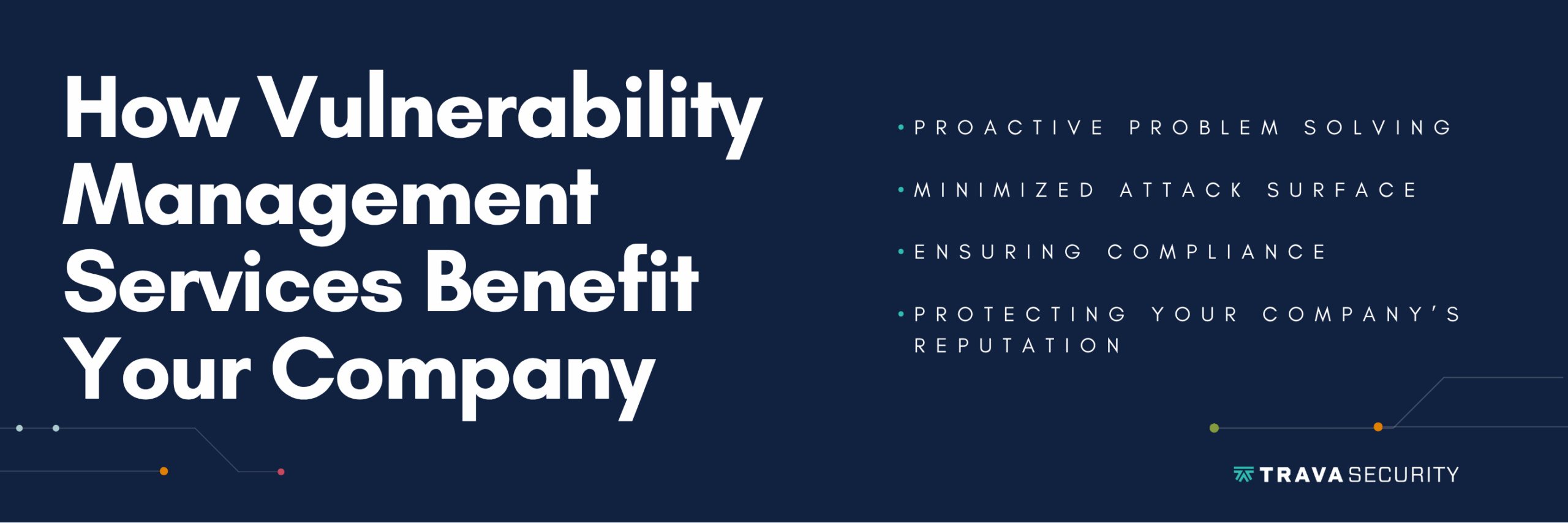
Proactive Problem Solving
With VMaaS, you’ll benefit from a more proactive cybersecurity approach. That means vulnerability management services continuously scan your systems and alert you as problems arise in real time. This helps your team address vulnerabilities sooner.
For example, your VMaaS provider might find a critical code execution flaw and help you solve the issue before hackers find it. Without a proactive threat detection system in place, you may not notice the problem until it’s too late to limit the damage.
Minimized Attack Surface
Vulnerability assessment services can also minimize your attack surface, which is the sum of all potential points where an attacker could try to enter your systems. VMaaS eliminates the low-hanging fruit that hackers tend to target first, including:
- Open ports
- Default credentials
- Unpatched software
- Cloud misconfigurations
Each fix delivered reduces the surface area available to attackers. Every time that happens, it lowers your likelihood of experiencing a serious breach.
Ensuring Compliance
VMaaS can also help your company comply with key frameworks and standards like PCI DSS, HIPAA, ISO 27001, and SOC 2. For example, at Trava, we perform framework-focused scans, deliver audit-ready documentation, and help you demonstrate evidence of continuous monitoring history. These actions are often required when pursuing certification.
Protecting Your Company’s Reputation
All of these benefits add up to protect the valuable reputation your company has built over time. Taking a more proactive approach to cybersecurity keeps clients feeling safe and your brand out of the headlines for the wrong reasons.
Benefits of Outsourced Vulnerability Management vs. In-House
Some organizations prefer to manage vulnerabilities entirely in-house. That can work for a business with a large, dedicated security team. But it comes with significant challenges for most growing and mid-market organizations who have to deal with:
- Resource strain: Building and maintaining an internal vulnerability management program takes specialized expertise and tooling. Plus, it means ongoing time commitments that pull engineers away from core priorities.
- Coverage gaps: Without continuous, automated scanning and expert oversight, vulnerabilities can go undetected for months.
- Keeping pace: The threat landscape is always changing. An internal team managing vulnerability management alongside other responsibilities will struggle to keep up with it.
- Compliance documentation: Generating audit-ready reports and evidence of continuous monitoring is time-consuming without the right systems in place. Since many frameworks require this, it’s rarely optional.
Outsourcing to a trusted partner like Trava is one of the most cost-effective ways to solve these challenges. We provide faster access to expert-led, continuous vulnerability management without the overhead of hiring or training new employees. Plus, you won’t have to worry about paying extra to retain specialized staff in a competitive labor market.
How To Choose a Vulnerability Management Provider
Here are the most important things to look for in a cybersecurity compliance partner:
- Expertise across compliance frameworks: Your provider should have deep experience with SOC 2, HIPAA, PCI DSS, and any other standards you hope to comply with. Otherwise, you may end up paying for a team to learn on the job.
- Continuous monitoring, not periodic scans: Look for a provider that offers ongoing coverage to keep you protected over time.
- Clear, actionable reporting: Providers should communicate their findings in plain language with prioritized guidance. This helps your team act faster.
- Scalability: Your provider should be prepared to scale services up or down as your environment changes over time. Otherwise, you could end up needing to change providers at an inopportune time.
- Proven track record: Look for demonstrated success with organizations similar to yours in size, industry, and compliance needs.
Trava brings all of this to the table and has a 100% success rate for framework compliance. From automated scanning to expert guidance, our vulnerability assessment services are built to meet your organization where it is today and grow with it over time.
The Lasting Value of Vulnerability Management as a Service
Vulnerabilities are inevitable, but their exploitation doesn’t have to be. Every organization has weak spots. The difference between those that stay secure and those that don’t comes down to whether they have a continuous process for finding and fixing weaknesses.
Vulnerability management as a service makes that process easier to access for growing and mid-market teams. From automated scanning and risk prioritization to compliance reporting and remediation guidance, VMaaS provides the expert-led coverage your business needs to stay ahead of threats. Plus, it will help you stay compliant with the requirements of frameworks like SOC 2, HIPAA, and PCI DSS.
When you’re ready to take a more proactive approach to security, Trava is here to help. Our team has worked with organizations across industries to build custom vulnerability management programs that protect data, satisfy auditors, and keep customers happy.
Learn more about the value we can bring to your program by exploring our assessment services today.
Vulnerability Management as a Service FAQs
What is vulnerability management as a service (VMaaS)?
VMaaS is a subscription-based cybersecurity solution where experts scan, prioritize, and fix vulnerabilities on your behalf. It provides ongoing coverage to keep your company protected as its technology changes and new threats emerge.
What is vulnerability assessment?
A vulnerability assessment is an evaluation designed to identify and prioritize security weaknesses. It typically includes automated scanning, expert analysis, and remediation guidance. Think of it like a diagnostic test that provides the information you need to run your vulnerability management program.
What’s the difference between VMaaS and vulnerability scanning?
Vulnerability scanning is a single part of a larger vulnerability management program. It’s the automated process of detecting known weaknesses in your environment. VMaaS covers the full scope of your needs, including scanning, expert analysis, risk prioritization, remediation support, compliance reporting, and continuous monitoring.
How does VMaaS map to SOC 2, HIPAA, and PCI DSS?
Each of these frameworks asks organizations to demonstrate their ongoing attention to security vulnerabilities. For example, SOC 2 asks for evidence of continuous monitoring and risk management, while HIPAA requires regular reviews for vulnerabilities that could expose protected health information. PCI DSS mandates regular vulnerability scans and penetration testing for organizations handling cardholder data.
A well-structured VMaaS program generates the documentation, scan history, and remediation evidence that auditors look for across all three frameworks — and many others.
What is the vulnerability management process?
The vulnerability management process is a cycle of threat reduction steps repeated regularly. It includes:
- Identifying vulnerabilities through scanning
- Prioritizing them based on risk and business impact
- Treating them through patching and other remediation controls
- Monitoring your environment to verify fixes and catch new issues as they emerge.
This cycle should be repeated regularly to keep your security posture current as the threat landscape evolves.
Can VMaaS scale as my SaaS company grows?
Yes, this is one of its biggest advantages. As you add new systems, expand your cloud infrastructure, onboard new customers, or pursue additional compliance certifications, your VMaaS provider adjusts coverage accordingly. You’re never locked into a fixed program or paying for services that you don’t need.
Who should consider vulnerability management as a service?
Any organization that handles sensitive data, operates in a regulated industry, or is working toward compliance certification should have a structured vulnerability management program in place. VMaaS is an especially good fit for SaaS companies that need to demonstrate security maturity and mid-market organizations that want comprehensive coverage without scaling their internal headcount.
Ready to stop reacting and start getting ahead of security risks?
Trava’s vulnerability assessment services are built from the ground up with your needs in mind — whether you’re a SaaS startup pursuing your first certification or a mid-market company managing a growing attack surface.
Let us help you build a stronger, more resilient security program. Explore our vulnerability assessment services today.